Community media in Kampong Thom province has played a pivotal role in enhancing One Window Service at the district level through citizen journalists’ video reporting, prompting immediate service efficiency improvements from local authorities.
Community mediais a new initiative, serving as as a media development tool aimed at empowering local voices in Cambodia, which is currently implemented by the Cambodia Center for Independent Media (CCIM). To build on existing experience and sustain the work of citizen journalists (CJs), community media will serve as a new platform to address pressing issues facing the communities. As of 2024, CCIM has helped set up 12 community media teams in 12 target provinces.
Community Media in Kampong Thom Takes Lead
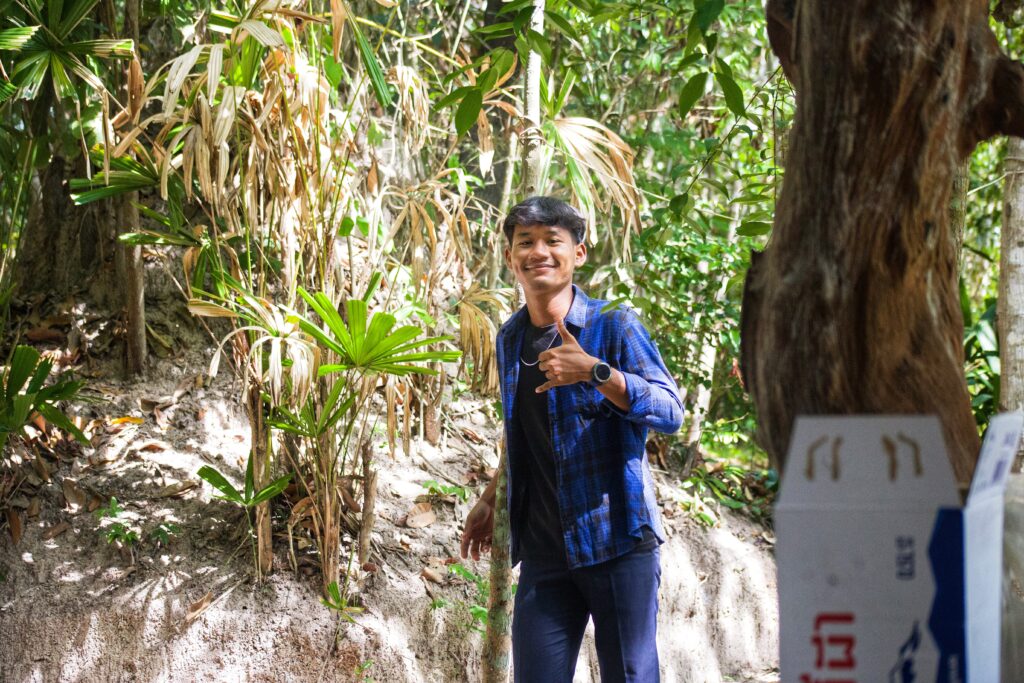
After being trained on community media and basic journalism by CCIM in August 2024, Mr. Seng Longdy, a citizen journalist and core member of Community Media Team (CMT) in Kampong Thom, About Kampong Thom Community, started to use this model for promoting public-interest and local issues to the public.
Since establishing One Window Service in 2003, Cambodia has expanded One Window Service Office (OWSO) at all districts/Khan across the country to improve service provision for the public. OWSO is a mechanism to reduce corruption and promote accountability and transparency in providing quality public services.
Locals in Domrey Slap commune, Kampong Svay District, have long been upset and criticized the poor service at the One Window process at this district as very complicated, lengthy and inefficient. They said they wasted time and money when trying to access services such as certification of a family book, birth and marriage certificates, and other documents. These locals reported that they either never seemed to get the required documents, the information about the process got mixed up, or their documents had spelling errors.
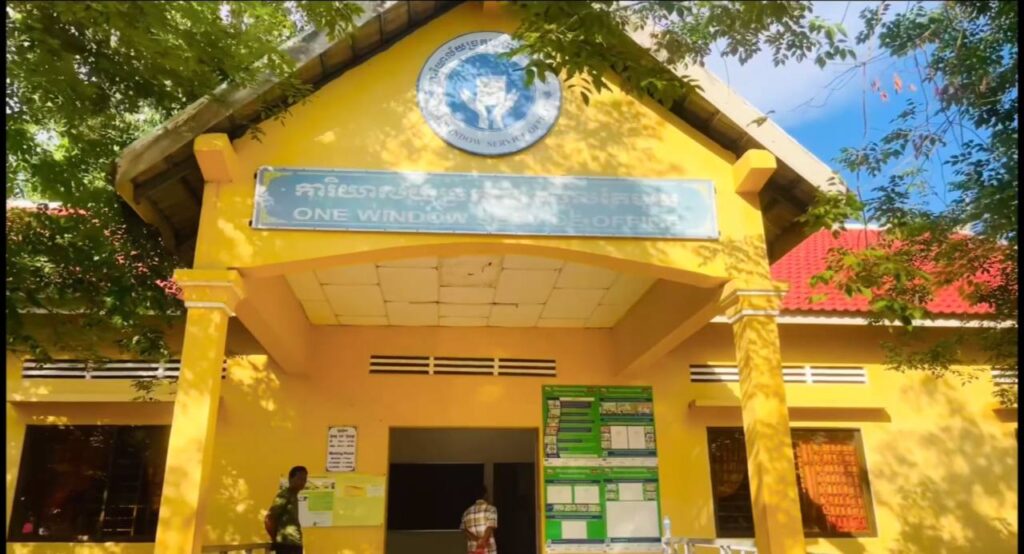
Moved by numerous private complaints from local residents, Longdy decided to initiate an investigation into the issue and sought editorial guidance from CCIM trainers to complete his report. He spoke to the villagers who experienced difficulties in accessing the service mostly for their birth certification documents. It was not easy for Longdy to convince the concerned people to speak on record as they fear being targeted or retaliation. It took a week for him to identify sources who were brave enough to speak to citizen journalists like himself.
Longdy experienced frustration with this journalistic work, but finally successfully prepared the piece for publication. His news report, titled “Locals Strongly Criticize Poor One-Window Service at Kampong Svay District”, was posted CJ News Facebook page and shared onto the newly established community media page named “About Kampong Thom Community” on 16 May, 2025.
“The people in Kampong Svay District were complaining about the poor service at One Window service in this district. They were calling to the media to help raise awareness of the issue. As a core member of the Community Media Team (CMT), I decided to use the community page to amplify the citizens’ voices and publicize the issues that are happening and affecting public interest in Kampong Thom”, said Longdy.
The story received the highest social media engagement of the month, gathered a total 1.3k likes, 117 comments, 2.7k shares and 152k views on CJ Khmer Facebook Page.
The video news report did not only attract great social engagement and public comments on the post, but also triggered immediate reaction from local authorities in improving the service delivery at the One-Window service. In response to public criticism, the district authorities apologized for the prolonged service delivery due to “massive service requests per day”, and promised to speed up and solve the problems in a timely and proper manner. However, before a positive outcome, the CJ had to confront threats from relevant stakeholders.
Community Reporting Can Not Go Unnoticed
Following Longdy’s video report addressing local public service delivery issue, the CMT in Kampong Thom was spotted and monitored by district authorities.
On 17 May, 2025, Longdywas invited for private lunch meeting with Kampong Svay District official to discuss his video reporting detailing public criticism on poor service delivery at the One Window mechanism at Kampong Svay District.
In that lunch meeting, the official questioned the reliability of news sources, told the CJ to reveal the source identifies, and gently asked to remove the video posted on CJ News page, claiming that one source was not clearly identified in the news and the other source was summoned by the authority to give further information but later denied their words.
After having met with the CJs and sources, the official actually welcomed the public criticism and acknowledged the shortcomings with the process and service delivery at one-window service at the district which has disappointed the villagers. He requested the CJ to post a response by the Kampong Svay District Administration on the CJ Khmer page. In the respond letter, the official apologized and promised some reforms on the quality service delivery and efficiency. The response letter was posted on Kampong Thom Community and CJ News Facebook page on 19 May, 2025.
As for the CJ, Longdy felt somewhat overwhelmed and having mixed feeling unsure if he is now in trouble or if he had initiated a connection with local authorities over his news reporting.
“I felt a bit overwhelmed after that meeting [with the authorities]. I feel like I am being watched and under surveillance for my reporting work following that meeting. However; after this incident, I started to build up my courage and continue working as citizen journalists and using the community media page to voice out the people’s concerns to the media”, Longdy said.
CCIM’s Executive Director, Chhan Sokunthea, said that engaging citizen journalists in community media initiatives aims not only to empower local communities to share their stories, concerns, and aspirations, but also to equip community media teams with the skills and resources they need to remain self-sustaining after CCIM’s support ends.”
Since 2011, CCIM has trained hundreds of citizen journalists across Cambodia to report on local issues safely through training on basic journalism, mobile reporting and digital and physical security. This linkage aims at amplifying local voices and empowers communities to share their concerns and stories of development to the public. The goal is to contribute to a healthy democratic and open society, where human rights are respected, voices are heard, and the communities are well informed and engaged in a meaningful participation.
“Community media plays a critical role in providing a platform for locals to voice their concerns to the public, to relevant stakeholders who in some cases have influences in bringing about solution to their issues. The case of citizen journalist in Kampong Thom is a clear example where a citizen is empowered with journalism skills to address their ongoing concerns,” she said, adding that the concerns includes all kind of issues such as land rights, indigenous rights, access to clean water, natural resources, education, public services, culture, and governance.
“Citizens now can produce their own news and be one of the publishers for their own stories. As a result, community media also serve as platform for community to access to information. This increases access to information about local communities in Cambodia, where in the current media landscape, these local voices are usually overlooked. For this reason, CCIM program focus on building capacity of the citizens to take lead and ownership in their ability to use journalism and community media platform to advance and access their rights from all stakeholders including duty-bearers,” she added.
However, there are factors that are hindering the work of CJs and the function of community media in Cambodia which need urgent solution, Sokunthea said. Citizen journalists faced with continuous restriction to access to information from local authority along with the lack of collaboration with relevant stakeholders in providing information continue to limit citizen journalism reporting.
At the same time, CJs are faced with threats and intimidation similar to professional journalists when working on sensitive issues facing their communities such as land rights or environmental issues. This shows that physical security and legal protection for citizen journalists need to be strengthened for them to continue reporting.
At the same time, amid fewer number of independent news outlets operating, there is further needs to capacitate more citizen and existing citizen journalists to use journalism and community media for greater advantage.
This program has shown some effectiveness. To illustrate, Kampong Thom Community Media team have produced a total of 40 stories posted on the newly established community media page named “About Kampong Thom Community”— focused on a wide range of issues addressing good governance, land conflict, indigenous communities, education and other issues. Meanwhile, CCIM also received approximately 15 reports produced by the trained CJs per month from the 12 target CMT-based provinces. The stories, primarily produced in video format by CJs and CMTs, have prompted local authorities to find solutions for problems related to good governance, gender and inequality, illegal logging and land conflict and other human rights issues etc.
What’s next for Community Media?
Since 2024, CCIM has supported the establishment of community media initiatives by training and expanding CJ members in 12target provinces to run community-owned Facebook pages, namely Siem Reap, Kampong Thom, Oddar Meanchey, Bantey Meanchey, Battambong, Pursat, Kampong Cham, Kampong Chhnang, Tbong Khum, Stung Treng, Kratie & Preah Vihear.
Using community media as a tool will amplify the work of CJs and empower vulnerable communities to voice out their challenges and contribute to community development. However, the operation of Community Media relies on motivation and aspiration of each Community Media Team’s and their ability to inspire members to participate and, in the long run, operate the platform on their own.
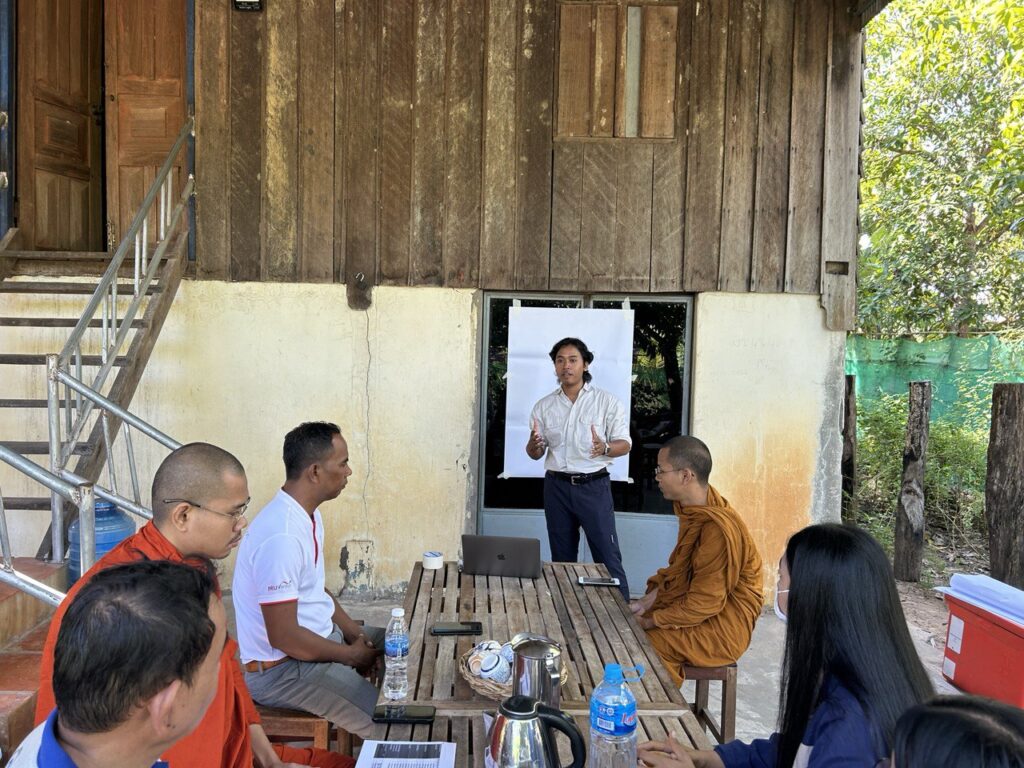
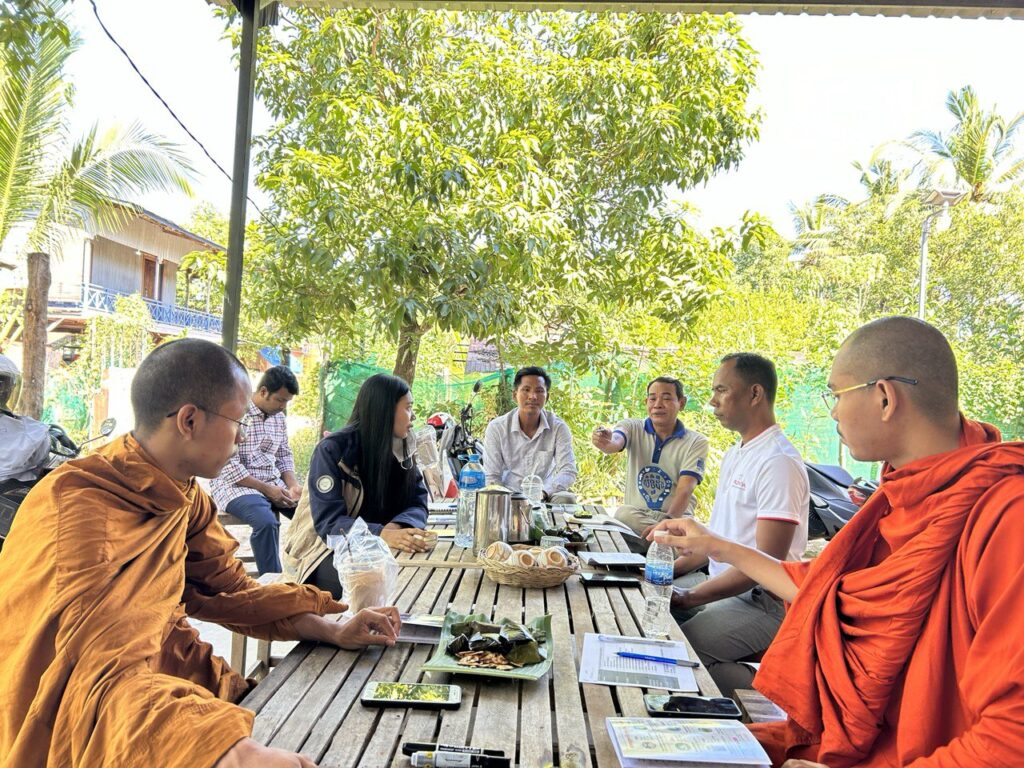
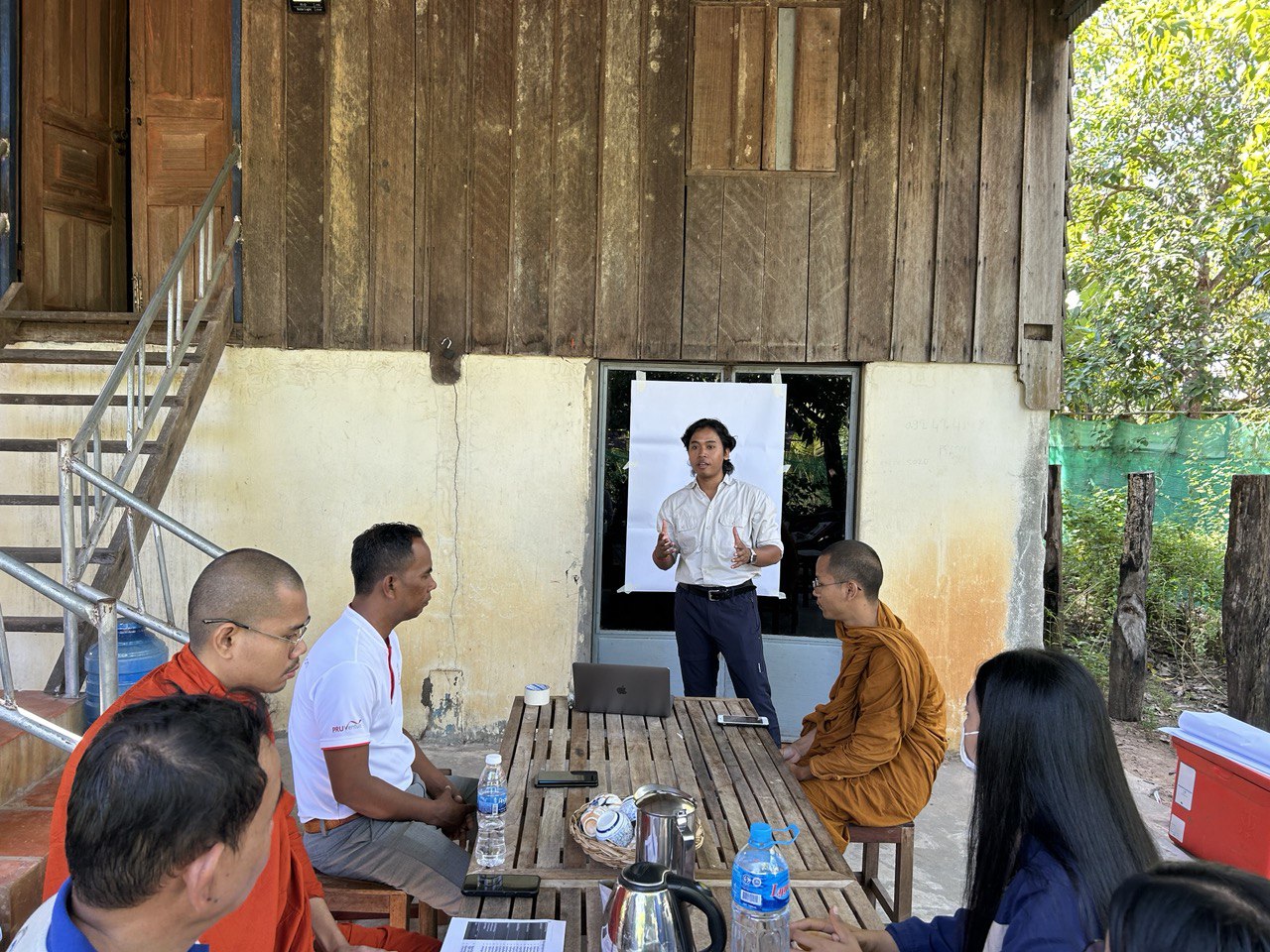
CCIM held meeting amongst CMT and CJs members in Siem Reap to orient about community media initiative on 18-22 Nov 2024. (Photo: CCIM)
The establishment of community media requires two constitutive steps by developing organizational structure of community media teams (CMTs) and setting up of community-owned Facebook page. Firstly, the CMT core members are appointed, and they then create their own work plan to mobilize a team of newly trained and existing citizen journalists in their own province. Secondly, they agree to set up and propose the name for their pages and formulate a strategy plan to run their community social media pages.
The next step is to ensure they are functional by monitoring their progress and providing timely support. This helps address the problems each CMT encounters regarding member mobilization, technical skills on page management, and quality news reporting and diversified contents on the pages.
In the initial stage, CCIM has provided extensive support to help CMT and CJ members mobilize their teams by linking new and existing CJs, implement their work plans, and receive small story grant to incentivize their continued local reporting.
The implementation and sustainability plan is gradually being realized through the work and impactful stories by the CJs and CMT in the target provinces. The development of community media in Cambodia is just taking shape and moving forward in a challenging media environment defined by limited resources and lack of funding. There is clearly a great need for continued funding to ensure the community media’s long-term sustainability beyond its initial pilot stage.
…………………………………..
Article by Pich Chamrong ,Citizen Journalist Program Coordinator